
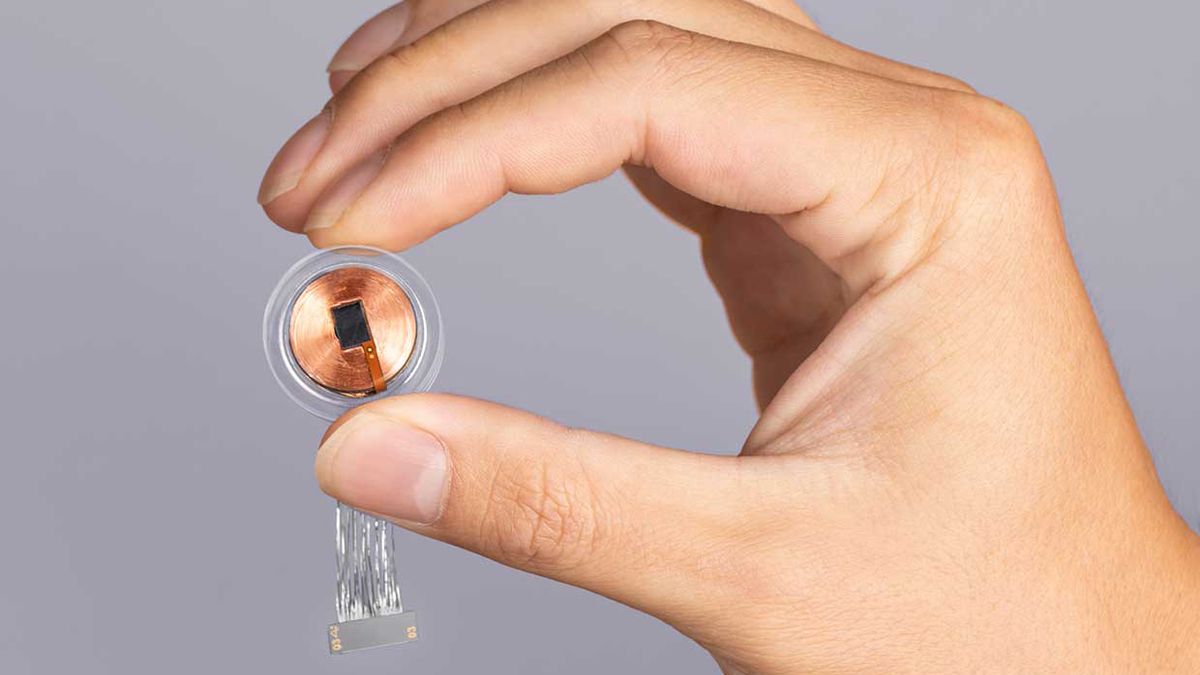
You may have heard about Elon Musk’s new chip being implanted into the human brain, but what’s the story behind the device and what could it mean for our future?
Neuralink is a neurotechnology company founded by Elon Musk that aims to develop implantable brain-computer interfaces enabling direct communication between the human brain and external devices. In more simple terms, Neuralink is developing devices that connect to the human brain to allow us to control technology with our minds. This technology sounds like something out of a sci-fi movie, but it could actually be instrumental in helping people with damaged connections between their brain and muscles.
The Neuralink chip implant is attached to the brain by a surgical robot that precisely connects electrode threads from the device to the motor cortex. The electrodes detect spikes in activity from the motor cortex when the user thinks about movement or locating an object with their eyes, stimulating the spinal cord that causes the associated muscles to move. The device produces motor intensions by stimulation, producing different movements by stimulating different electrodes.
A prototype for the device was tested on many animals before its first implant into the human brain took place on January 29th, 2024. One of the conducted tests with the device was done on pigs to analyze their movements and the signals produced within their cortex and spinal cord to stimulate the electrodes associated with this movement. By understanding which signals and electrodes connect to each movement, these movements could be stimulated and repeated by the Neuralink. This system could be translated into the human body for people with spinal cord injuries who have severed connections between the brain and their body. The Neuralink could connect to the spinal chord’s motor pool that connects to the associated muscles in the body and stimulate these neurons to activate the muscle, potentially giving paralyzed people the ability to walk again by using Neuralink. The device has also been tested on monkeys to use “telepathic typing.” This test shows the monkeys telepathically selecting the highlighted keys on a computer screen by focusing on the key for a short amount of time. This idea could be used by humans to telepathically control a device that allows them to type or select words to have a conversation with others, or to control a computer without having to type on the physical keys.
Even though the Neuralink may sound like a flawless system that could solve many issues for humans, the development of the device and testing process have faced some challenges. One of the biggest issues and concerns for the device is how it will affect the animal or human it is implanted into. Many deaths have been reported in the animals that Neuralink has tested on, raising concern for the safety of the device and use within the human brain. Another issue with the device is the impact it could have on the human brain and the longevity of the device inside of the human body. Since the Neuralink is placed in arguably one of the most important parts of the human body, some may be concerned about the device leading to issues like brain swelling or infections. Furthermore, as the brain is a corrosive environment for non-living materials like the Neuralink, the device must be durable. The electrode threads that connect to the brain are a small fraction of the thickness of a single strand of human hair, posing the challenge of creating a seamless connection between the brain and the Neuralink that won’t be damaged while it is placed in the brain.
The Neuralink is still developing today and working to make the product available to a wider audience, thinking about different people who could potentially benefit from the solutions the device brings. The device was approved by the FDA in May of 2023 to conduct is first human clinical trials, and the team is still working to make improvements to the device. So far, the first human to receive the device has been recovering well and the Neuralink is continuing to look for more volunteers to test the device.
Neuralink’s brain-chip could be the start to helping many people with paralysis, visual impairments, spinal cord injuries and even neurological conditions regain some of their bodily functions and bring new opportunities for humans that have never been seen before. The intentions behind the device and optimism of the project seem promising thus far, but the longevity of the device and its effect on humans have yet to be determined.
Credits:
Information in italics above was taken from the results of ChatGPT text when prompted “one sentence explanation of what is Neuralink.”
ChatGPT was also used to proofread this blog post.